
 English
















































































































































































































































































































































































































































































































































































































































































































































































































































Which countries are banning social media for Kids?

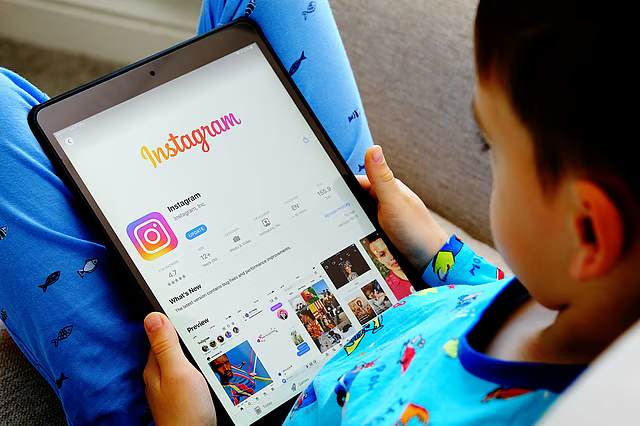
The United Kingdom became the latest country to ban social media for children, under-16s will be barred from platforms including TikTok, Instagram, Snapchat, Facebook, YouTube, and X.
The UK follows Australia which became the world’s first country to pass a social media ban for children.
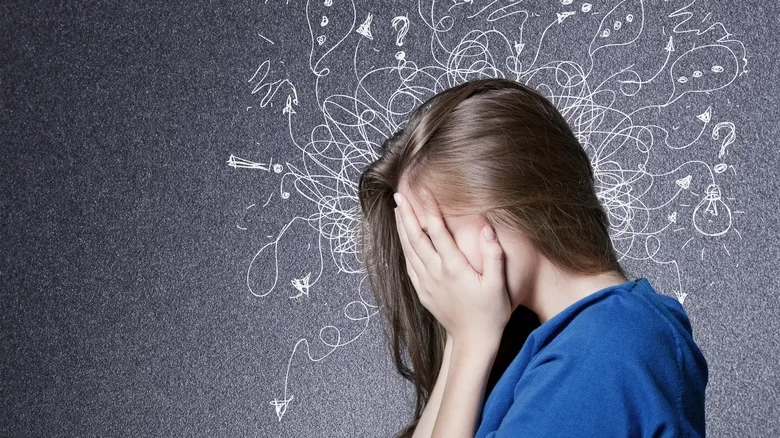
Since then, a wave of countries have either passed legislation or are actively moving to do so, citing growing concerns over cyberbullying, addiction, mental health, and children’s exposure to predators online.
Rather than simply tightening rules around content moderation and age verification, a number of governments are opting for outright bans on access for under-16s. Here is a full breakdown of every country that has banned or is moving to ban social media for children.
Countries that have banned or are moving to ban social media for children
1. United Kingdom
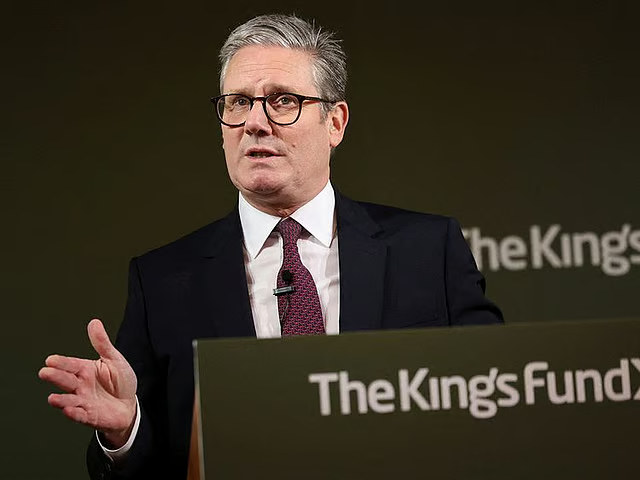
Prime Minister Sir Keir Starmer announced a ban on June 15, 2026, prohibiting children under 16 from accessing major social media platforms including TikTok, Instagram, Snapchat, Facebook, YouTube, and X. Messaging apps such as WhatsApp and Signal are exempt. Tech companies will be required to prevent under-16s from creating accounts, and existing profiles are expected to be deactivated.
2. Australia
Australia was the first country in the world to pass a social media ban for children, with legislation taking effect in December 2025. The minimum age to hold an account on designated platforms, including Facebook, Instagram, TikTok, Snapchat, X, Reddit, Twitch, and Kick, is 16.
3. Indonesia
Indonesia became the first non-Western country to enforce age-based digital restrictions, with its ban for under-16s taking effect on March 28, 2026. High-risk platforms, including YouTube, TikTok, Instagram, Facebook, X, Threads, Bigo Live, and Roblox are required to deactivate underage accounts. Non-compliance could result in fines, temporary suspensions, or loss of market access.
4. Malaysia
Malaysia’s ban came into force on June 1, 2026 under the Child Protection Code of the Online Safety Act. Major platforms must restrict registrations for under-16s and implement age verification using government-issued identity documents. Existing underage users have a six-month window for age verification, with one month to transfer data if they are found to be under 16.
5. Türkiye
The Turkish parliament passed legislation in April 2026 requiring social media platforms to block under-15s from creating accounts, introduce parental controls, and rapidly remove harmful content. Online gaming companies must also appoint a local representative. The bill awaits sign-off from President Recep Tayyip Erdoğan before passing into law.
6. Greece
Greece will ban social media for children under 15 from January 1, 2027, with Prime Minister Kyriakos Mitsotakis citing rising anxiety, sleep deprivation, and addiction among minors. The government is also pushing for an EU-wide ban and is working on mandatory identity verification for all users to reduce online harassment.
7. France
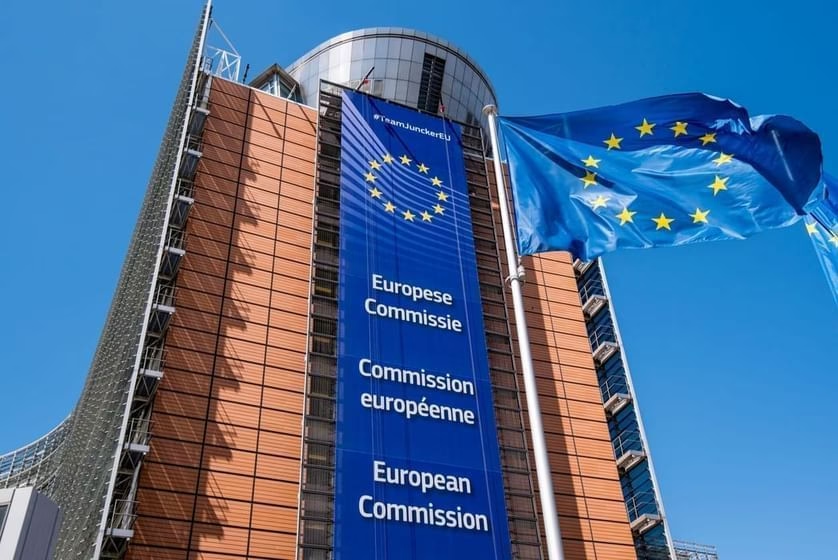
France has drafted legislation to introduce a “digital majority” at age 15, blocking major social platforms for younger children unless explicit parental consent is given. The bill has advanced through both the Senate and lower house, but has been referred to the European Commission to ensure compliance with EU digital law.
8. Canada
Canada’s proposed Safe Social Media Act (Bill C-34) would ban under-16s from social media unless platforms implement approved safeguards. It also targets AI chatbots and requires the rapid removal of harmful content, including non-consensual intimate images within 24 hours of it being flagged. The bill is in its early legislative stages.
9. Norway
Norway plans to introduce a bill to parliament by the end of 2026 that would raise the minimum age for social media use from 15 to 16, placing legal responsibility for age verification on tech companies rather than young users.
10. Spain
Spain is proposing an Australia-style ban for under-16s, with platforms required to implement rigorous, real verification barriers rather than simple checkbox consent. Tech executives could face criminal liability if illegal or hateful content is not removed promptly. Parliamentary approval is still required.
11. Denmark
Denmark proposed legislation in 2025 to set the minimum social media age at 15, with a provision allowing 13- and 14-year-olds to access platforms with explicit parental consent. A digital identity app linked to the national ID system is being developed to enforce age verification. Platforms that fail to comply face heavy fines.
12. Germany
Germany is debating a national ban, with the governing conservatives proposing a limit for under-16s and the Social Democratic Party pushing for restrictions on under-14s. No legislation has passed yet.
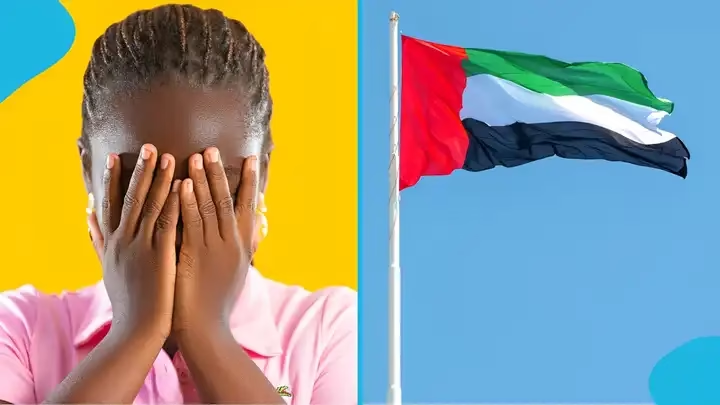
What about the UAE?
The UAE has not introduced a blanket ban but enforces a strict Child Digital Safety Law (Federal Decree-Law No. 26 of 2025).
From January 2027, all digital platforms targeting UAE users, including TikTok, Instagram, and Roblox, must prohibit data collection on under-13s without parental consent, strip predatory algorithms, restrict contact with strangers, and filter content by age.
Parents and guardians are legally required to ensure children are registered on age-appropriate platforms and to activate parental controls.
GN