
 English





















































































































































































































































































































































































































































































































































































































































































































































































































































































All relief measures UAE residents, businesses got since March 2026

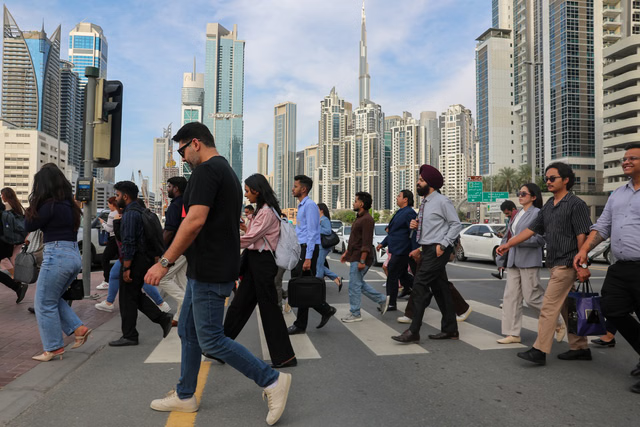
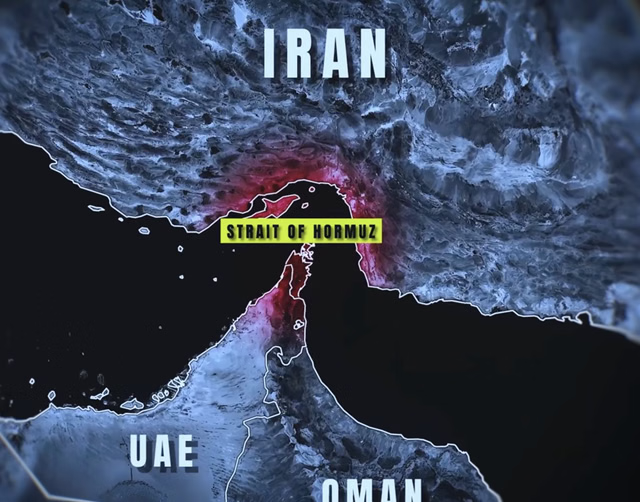
The UAE has introduced a wide-ranging package of financial and administrative relief measures since the outbreak of the Iran conflict in March 2026, as authorities moved to shield businesses and residents from regional economic disruption.
The support measures — announced by the Central Bank, Dubai authorities, regulators and UAE banks — have focused on preserving liquidity, keeping credit flowing through the economy and reducing short-term operating costs for businesses.
Banks have rolled out loan repayment relief and restructuring support for customers. Dubai authorities have deferred government fees, extended customs deadlines and eased some residency-related procedures. Regulators have also granted temporary flexibility on reporting and compliance requirements.
‘Timely, focused relief’
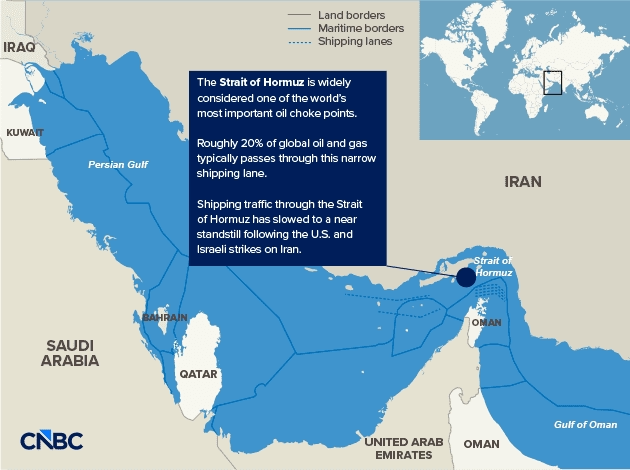
The measures come as businesses across the Gulf face uncertainty linked to shipping disruptions, higher insurance and freight costs, softer tourism demand in some segments and broader regional volatility.
Analysts at KPMG noted the UAE’s economic response package was designed to provide “timely and focused relief by easing short-term financial pressures, supporting business continuity, and protecting employment in response to the ongoing regional conflict.”
The advisory firm added that the initiatives “help preserve short-term liquidity, reduce compliance and administrative burdens, and promote economic stability, while allowing sufficient time for a measured and sustainable recovery of the economy.”
Here is a breakdown of the key relief measures introduced across the UAE since March 2026:
UAE banks, borrowers
On March 17, the Central Bank of the UAE launched what it described as a Five-Pillar Financial Institution Resilience Package. The objective was to maintain financial stability, prevent a tightening of credit conditions and ensure banks continued lending to businesses and individuals affected by regional uncertainty.
1. Loan classification flexibility
One of the most significant measures involved temporary flexibility in how banks classify loans impacted by conflict-related disruptions. Normally, banks are required to move stressed loans into higher-risk categories if repayments become delayed or if borrowers show signs of financial strain.
The temporary regulatory relief allowed banks to avoid immediate migration of affected loans into Stage 2 or Stage 3 categories under accounting rules. This reduced the risk of businesses suddenly losing access to financing because of short-term disruptions tied to supply chains, tourism flows, shipping or consumer demand. The measure was particularly important for sectors such as aviation, logistics, hospitality and trade.
2. Release of capital buffers
The Central Bank also released key regulatory buffers, including:
- The Countercyclical Capital Buffer (CCyB)
- The Capital Conservation Buffer (CCB)
These buffers are normally maintained by banks to absorb stress during periods of economic turbulence. Temporarily easing these requirements increased lending capacity across the banking system and gave lenders more room to continue extending credit.
3. Liquidity support measures
Banks were granted additional access to portions of their reserve balances. The Central Bank also provided temporary relief on:
- Liquidity Coverage Ratio (LCR) requirements
- Net Stable Funding Ratio (NSFR) requirements
These measures were designed to prevent liquidity pressures from tightening credit conditions across the economy.
4. Continued lending expectations
The Central Bank also made clear that banks were expected to continue supporting customers rather than sharply reducing exposure. The guidance specifically highlighted sectors facing heightened pressure because of regional developments, including:
- Aviation
- Logistics
- Tourism
- Trade-related businesses
The regulator’s intervention was intended to prevent a broader credit squeeze at a time when businesses were already dealing with uncertainty around shipping routes, travel demand and operating costs.
Repayment, restructuring
Alongside the Central Bank measures, UAE lenders introduced their own support programmes for retail customers and businesses affected by regional uncertainty. According to banking sector figures, lenders collectively extended around Dh6.2 billion in relief and support measures for affected customers.
The measures differed between banks but broadly included:
- Temporary loan repayment deferrals
- Restructuring of existing loans and credit facilities
- Fee waivers and charge reductions
- Credit card payment flexibility
- Additional overdraft support for businesses
Several lenders also expanded hardship support programmes for SMEs, which were viewed as particularly vulnerable to sudden cash-flow disruptions. Banks said the support was intended to help customers manage short-term pressure linked to higher operating costs, shipping delays and weaker business activity in some sectors.
The banking sector response followed guidance from the Central Bank that lenders should continue supporting borrowers rather than sharply tightening credit conditions.
Dh1b economic stimulus
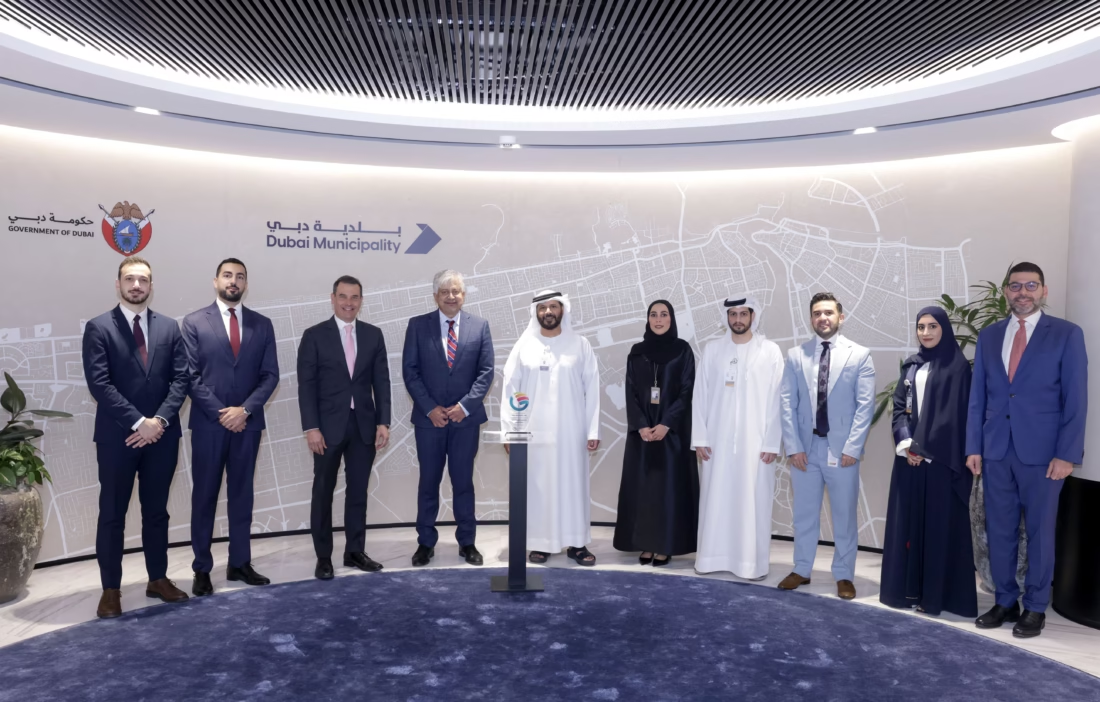
On March 30, Dubai approved a broader economic initiatives package designed to support business continuity and reduce administrative burdens. The package became effective from April 2026.
KPMG described the measures as introducing “temporary fee deferrals, extended customs grace periods, and procedural facilitations across customs, licensing, municipal services, tourism, and residency-related processes.” The package covered multiple sectors across the emirate.
Fee deferrals, waivers
1. Administrative fee deferrals
Dubai authorities introduced a three-month deferral for a range of government administrative, registration and renewal fees. The measure aimed to reduce immediate cash outflows for businesses managing uncertain operating conditions. The deferrals applied across several government-related services between April and June 2026.
Tourism and hospitality support
Dubai also introduced temporary relief measures for the tourism and hospitality sector. Authorities postponed collection of:
- The 7 per cent hotel sales fee
- Tourism Dirham fees charged to hotel guests
The postponement lasted for three months and was intended to support hotel operators and tourism-related businesses dealing with softer demand and travel uncertainty. The tourism sector was viewed as one of the industries most exposed to regional geopolitical developments.
2. Housing and municipality fee relief
The package also included relief on municipal charges. KPMG noted that “establishments are permitted to defer the payment of housing fees relating to staff and labor accommodation collected by Dubai Municipality for 3 months.”
The advisory firm also said authorities approved a “deferral of general cleaning service fees” for the same period. These measures primarily benefited companies operating large staff accommodation facilities.
3. Advertising and licensing fee support
Dubai also introduced temporary flexibility for licensing-related charges. Measures included:
- Deferral of advertising fees linked to commercial licences
- Reduced flat fees for licence amendments
The licence amendment charge was capped at Dh500 under the temporary support package.
Customs, logistics support
Dubai authorities also introduced measures aimed at easing pressure on importers, exporters and logistics firms.
1. Extended customs declaration grace periods
One of the most significant measures involved customs declaration timelines.“The grace period for export and transit customs declarations has been extended from 30 days to 90 days, with the option of renewal for a further equivalent period of up to 6 months, subject to compliance with applicable tax and customs regulations,” explained KPMG in a note.
The extension was intended to help businesses dealing with shipping disruptions and delays linked to regional instability. The flexibility reduced pressure on companies facing longer freight routes, rerouting challenges and supply-chain bottlenecks.
2. Virtual warehouse initiative
Dubai also introduced a virtual warehouse initiative allowing temporary duty-free import of certain high-value goods. The programme initially focused on artwork and specialised goods. The initiative removed the need for financial guarantees under some temporary admission procedures.
Authorities said the measure was designed to support Dubai’s position as a regional logistics and trade hub despite wider disruptions affecting freight and transportation.
DIFC, DFSA relief measures
The Dubai International Financial Centre and the Dubai Financial Services Authority also introduced temporary measures for firms operating within the financial free zone.
1. Regulatory flexibility
The DFSA provided temporary flexibility around:
- Regulatory reporting timelines
- Certain staffing requirements
- Governance obligations
- Licensing administration processes
The measures were intended to help financial firms maintain operational continuity during a period of heightened uncertainty.
2. Payment flexibility within DIFC
The DIFC also introduced more flexible payment arrangements for:
- Licence renewals
- Commercial rent
- Retail rent obligations
The objective was to reduce short-term financial pressure on businesses operating within the financial centre.
Workforce, residency support
Authorities also introduced measures aimed at reducing administrative friction for workers and employers.
1. Residency renewal facilitation
Residency permit issuance and renewal procedures were streamlined in some areas to reduce delays and administrative burdens. The measures were intended to support workforce continuity for businesses dealing with operational disruption.
2. Fine waivers and labour mobility support
Dubai also introduced waivers linked to some residency and labour mobility fines. The measures were designed to encourage workforce retention and simplify employee movement between Dubai and free zones.
Private-sector support initiatives
Alongside government and banking measures, several private-sector companies and organisations introduced independent support initiatives.
1. Rent relief initiatives
Major landlords and property groups introduced temporary incentives for commercial tenants. Some of the measures included:
- Rent-free periods on lease renewals
- Waivers on minor administrative penalties
- Flexible payment structures
The support was largely targeted at SMEs and retail businesses facing weaker demand.
2. SME grants and operational assistance
Some fintech firms and private organisations also launched direct support programmes. These included:
- Small business grants
- Community-funded SME support initiatives
- Advisory assistance for companies navigating regulatory and operational challenges
Telecom operators and technology firms also focused on maintaining service continuity and operational resilience.
Why these measures matter
The UAE’s response has focused less on broad stimulus spending and more on targeted measures designed to stabilise business activity and preserve financial confidence. The support package has largely centred on three priorities:
- Ensuring banks continue lending to businesses and households
- Reducing immediate operating and compliance costs
- Preventing temporary disruptions from turning into longer-term financial stress
KPMG said the initiatives “provide meaningful cash-flow relief, indirect tax timing benefits, and compliance flexibility for businesses operating in Dubai.” The firm added that the measures reinforce “confidence in Dubai’s resilient, responsive, and business-friendly economic framework.”
While the economic impact of the regional conflict is yet to fully determined, particularly for sectors exposed to trade flows, tourism and logistics, the combination of banking relief, fee deferrals, customs flexibility and regulatory easing has created one of the broadest coordinated support responses introduced in the UAE since the start of the regional tensions.
For businesses and residents, the measures are aimed at one core objective: keeping liquidity flowing through the economy while limiting operational disruption during a period of regional uncertainty.
Gulf News