
 English


















































































































































































































































































































































































































































































































































































































































































































































































































































































































































































How plastic bottle caps became a symbol of EU regulation


In July 2024, a European Union law came into force requiring plastic bottle caps to remain attached to their bottles. The regulation was widely mocked by social-media jokesters and Silicon Valley billionaires alike. This, people said, was Brussels at its worst: bureaucrats micromanaging, treating citizens like children who couldn’t be trusted to recycle a cap.
What went almost entirely unreported was the evidence behind it. Plastic bottle caps have been identified, across decades of coastal cleanup data, as among the top items found littering European beaches. Small, light and made from a different plastic than the bottle itself, the caps float independently once separated, travelling far longer distances than the bottles they came from. They are far more likely to be swallowed by seabirds, fish and marine turtles who mistake them for food.
Now consider what happened next. After lobbying against the rule, some of the world’s largest beverage companies redesigned their caps and adapted. But companies such as Coca-Cola also did something revealing: while they trumpeted the design of the new caps as a sign of their unwavering commitment to sustainability, they maintained the detachable ones virtually everywhere else. Not because the physics of plastic pollution differ across continents, but because no other country, be it the US or in Asia, has passed a national law requiring the change.
The bottle cap story is a parable for a larger fight playing out at the highest levels of European politics. One side claims that EU rules are the problem: a self-imposed burden of standards on business that slow Europe down while the US and China race ahead. The other says those rules are not a handicap but a source of power, the only instrument a continent without a single government possesses to shape its own economic future while protecting its people and the planet.
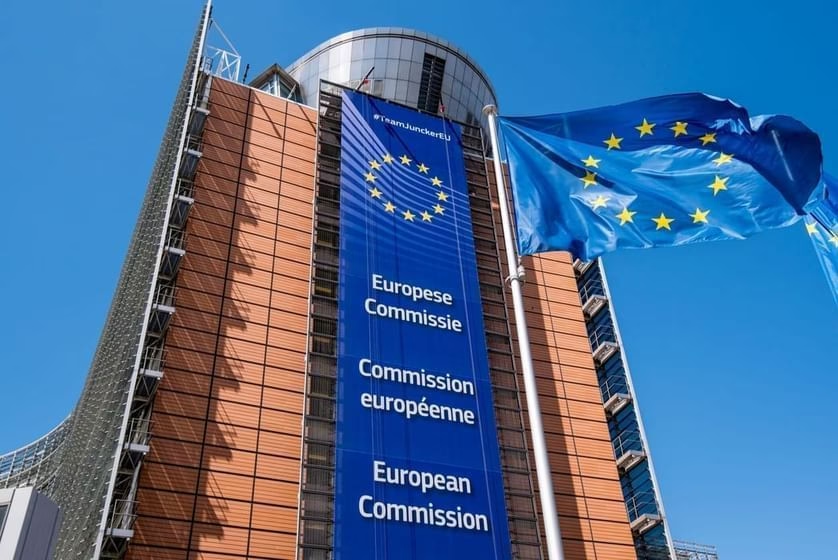
At present, the first camp is winning. The political coalition behind it is broad, stretching from Brussels to Berlin, Warsaw and Rome. The argument sounds on the surface entirely reasonable. From that diagnosis follows a programme of “simplification” championed by the European Commission led by Ursula von der Leyen: cuts to environmental protections, digital rules, consumer and food safety requirements. Standards that Europe spent two decades building are being rolled back, all in the name of competitiveness.
There is one problem at the foundation of all this. The diagnosis is at best questionable and at worst wrong.
The red tape explosion that would allegedly account for the widening growth gap with the US is a fiction. The OECD’s latest data shows that the regulatory burden on European business has arguably risen only modestly over the past 15 years.
Even the landmark 2024 report by Mario Draghi, the former chief of the European Central Bank commissioned by the EU to diagnose Europe’s economic weaknesses, cannot substantiate the claim.
The report’s most-cited figure, that more than 60% of EU companies saw regulation as an obstacle to investment in 2023, turns out on inspection to mean that only about 25% identified it as a major obstacle. This share has since risen but a larger proportion of European businesses remain concerned by other obstacles, such as energy costs. More importantly, Draghi’s central demand was not for a less regulated Europe, but a more coordinated, better-funded and strategically capable one.
And even if you accept the diagnosis, the proposed cure – deregulation – barely makes a difference. The European Commission’s own estimate of the annual savings from its entire simplification programme – the legislative packages at the centre of this agenda – is €12bn, or roughly 0.07% of EU GDP.
Europe’s productivity problem is real. But the caricature of a continent collapsing under regulation is not. Much of the apparent US-European growth gap reflects population growth, purchasing power, working hours and the very different social bargain Europe has chosen to preserve. This suggests that Europe does not need to become the US to become more competitive.
Dismantling Europe’s regulatory framework does not merely fail to deliver growth. It surrenders something that Europe has spent decades building. Consider what the targeted rules actually do. When the EU forced Apple to open its App Store to rival app developers and payment routes, Apple complied – at least in Europe. This reveals how EU digital market rules are not costly tick-box exercises, but the actual reason European consumers now have choices – in apps, in payment and platforms – that consumers in the US still lack. The wider European rulebook is also why Google, Meta and Amazon face limits on how they combine, harvest and monetise Europeans’ data. Weaken them, and US platforms – and their tech billionaires – gain even greater control over Europe’s markets and people.
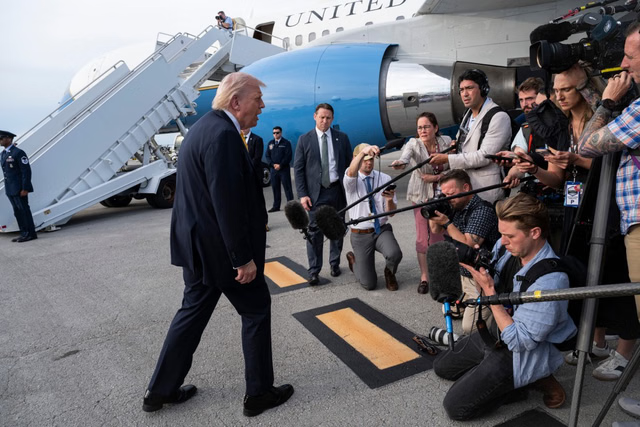
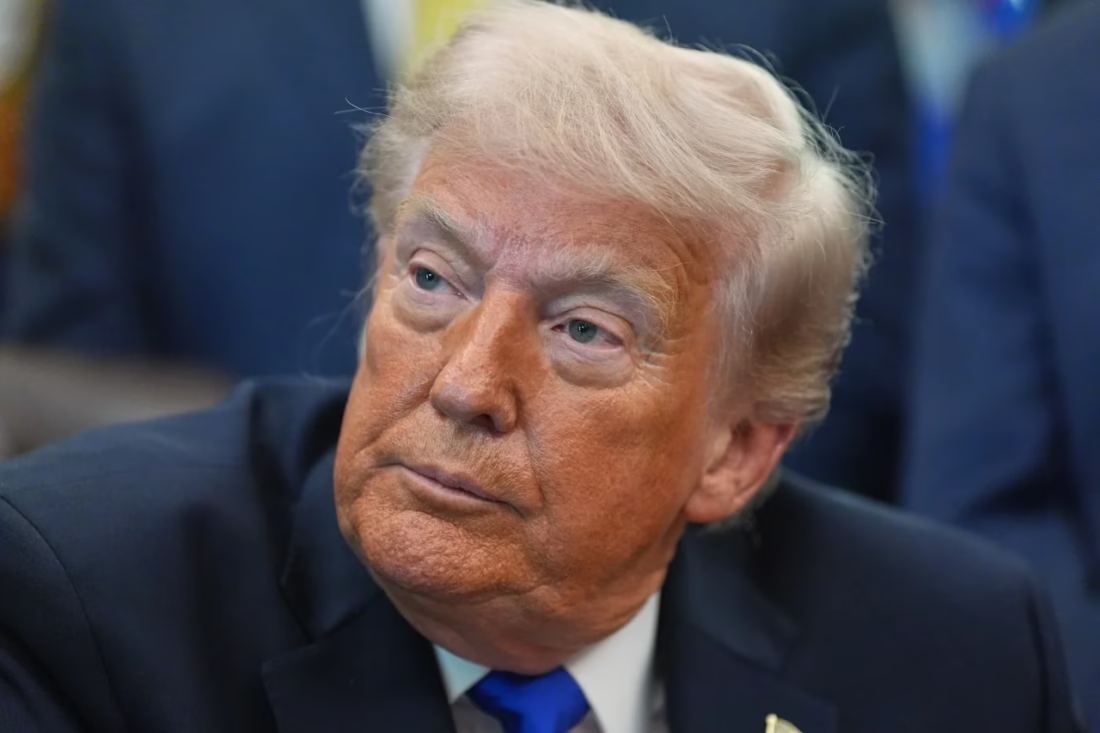
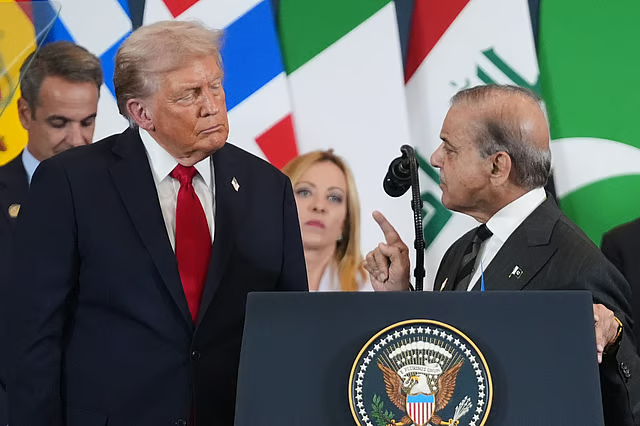
The timing of this push for deregulation is not a coincidence. The Trump administration formally designated Europe’s digital rules as trade barriers, threatened punitive tariffs if Brussels refused to weaken them and demanded their rollback as a condition for any deal on steel and aluminium. The deregulation agenda playing out in Brussels is precisely what Washington has been demanding through every available lever: weaker European rule-making, greater access for American firms and a continent less able to offer an economic or even ideological alternative to the US model.
Europe’s rules are not necessarily constraints, but at their best, they are instruments of power. They shift the burden of collective choices away from individuals and on to the companies best placed to bear them. That is why those companies so often oppose them and why, once the rules exist, they usually comply.
The bottle cap is still attached to the bottle in Europe. The question is whether Europe retains the will to be itself – a political project that uses rules to protect its people and shape global markets – or whether, in the name of competitiveness, it surrenders that power to exactly the interests that want that power gone.
THE GUARDIAN