
 English



















































































































































































































































































































































































































































































































































































































































































































































































































































































































‘Hollywood ending’ takes on sad new meaning

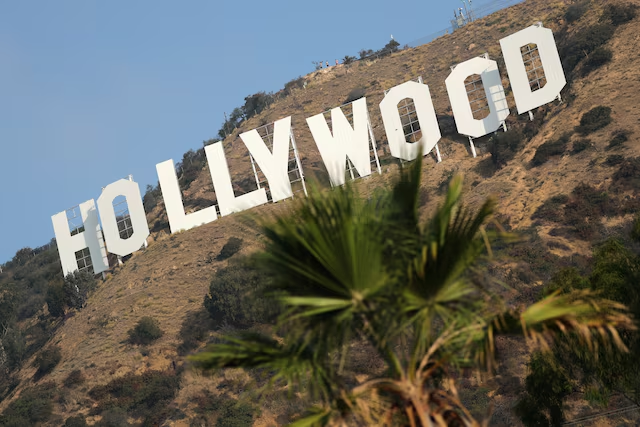
Even Hollywood is struggling to script a happier ending for itself. Artificial intelligence has injected fresh fear across an industry already grappling with the fallout from work stoppages, fewer scripted shows and corporate consolidation. Chances are fading fast for it to avoid becoming the next Motown or Madison Avenue.
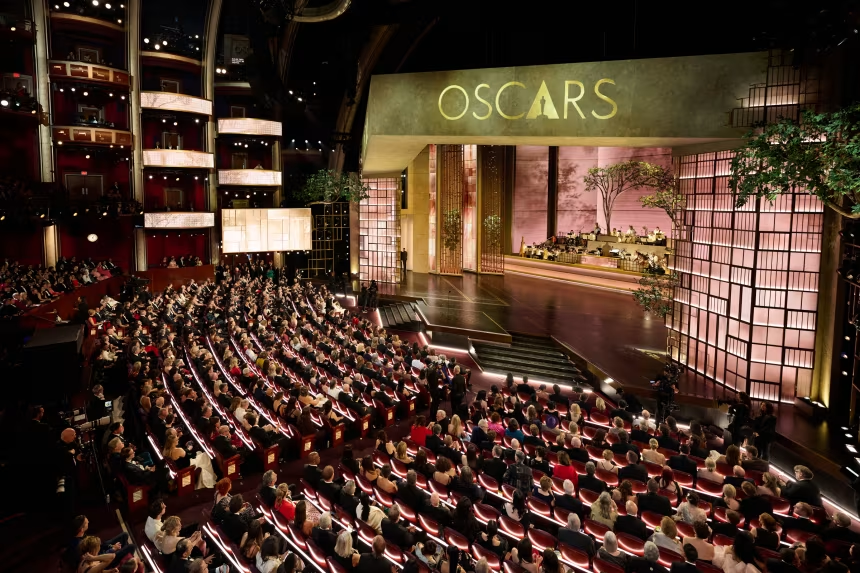
Since the 1920s, Hollywood, and by extension Los Angeles, has been the beating heart of a $3 trillion worldwide entertainment market, opens new tab. Five big studios – Walt Disney, Universal Pictures, Sony Pictures Entertainment, Paramount and Warner Bros – are based in the second-largest U.S. city. Nearly a fifth of written projects were filmed there in 2024, permit agency FilmLA estimates, opens new tab. At almost $120 billion, show business accounts, opens new tab for about 12% of local gross domestic product, according to the Los Angeles Department of Economic Opportunity.
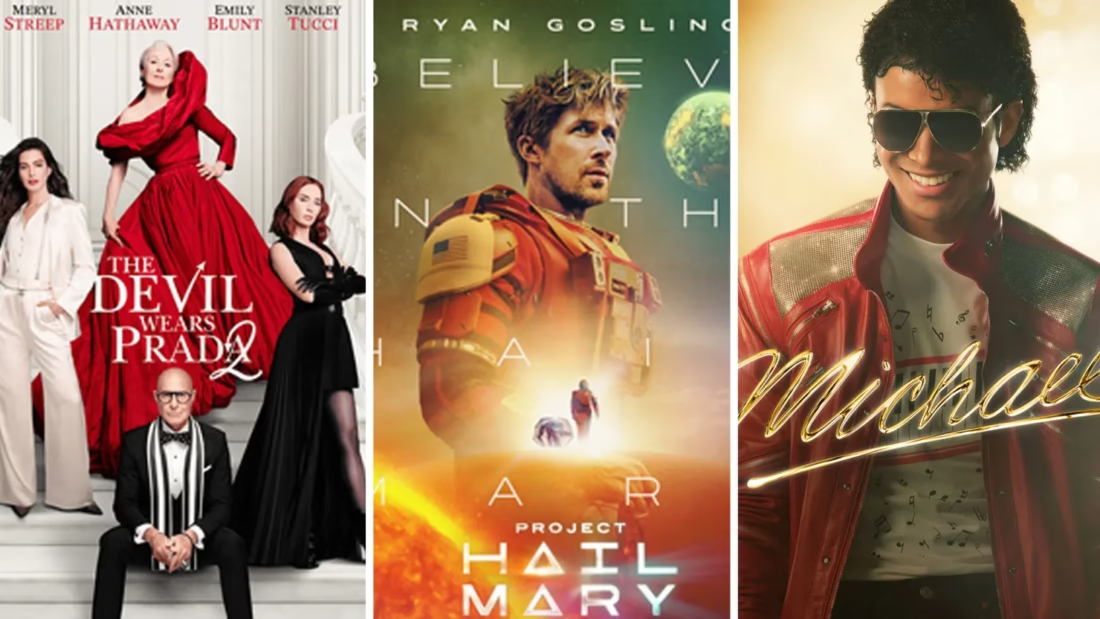
Hollywood’s influence also extends far beyond its landmark sign. Blockbusters like “Project Hail Mary” or “Ted Lasso” can be as powerful an ambassador as anyone at the U.S. Department of State. It’s an unrivaled export that quietly shapes public and political opinions across the planet. As the country’s allies and enemies alike increasingly sour on U.S. policies and posturing, it’s arguable that everyone from Oscar-winning director Steven Spielberg to “Euphoria” star Zendaya is more important than ever to the national brand.
This economic and reputational clout helps explain efforts to prop up Hollywood. California Governor Gavin Newsom last year more than doubled the state’s film and TV tax credit program to $750 million annually to compete with other domestic and international locations that have steadily lured productions with bigger financial incentives. A quest for federal handouts is now underway, with actor Jon Voight lobbying the White House earlier this year for a 20% U.S. tax credit for labor costs on homemade movies and programs.
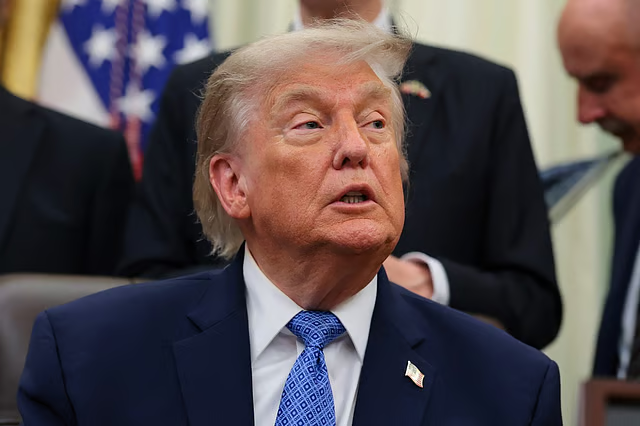
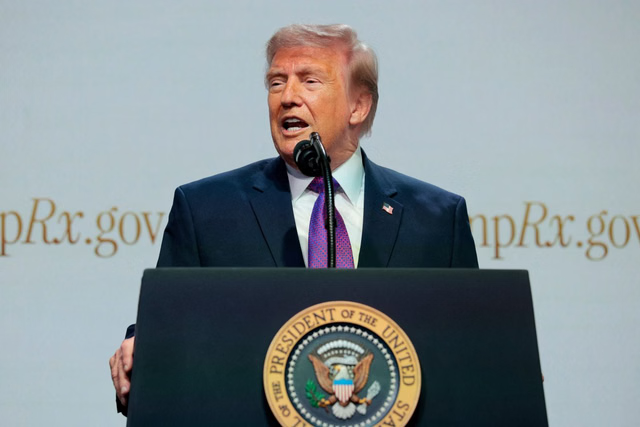
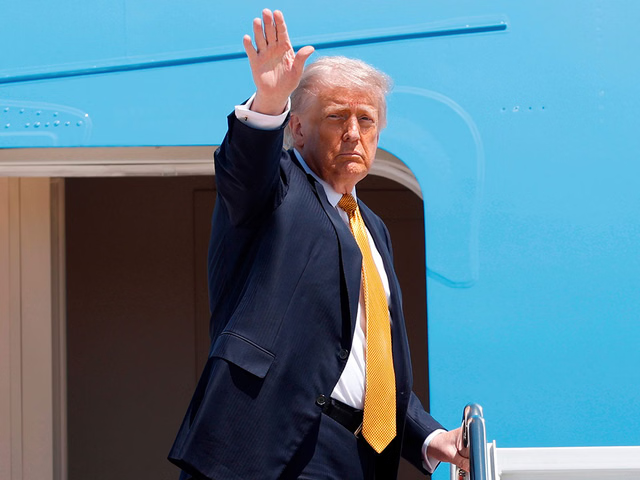
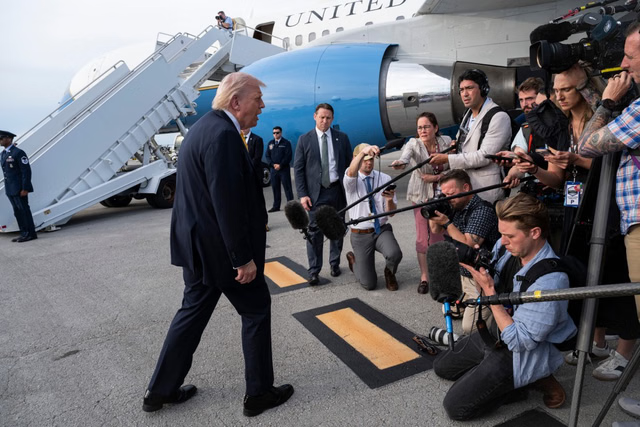
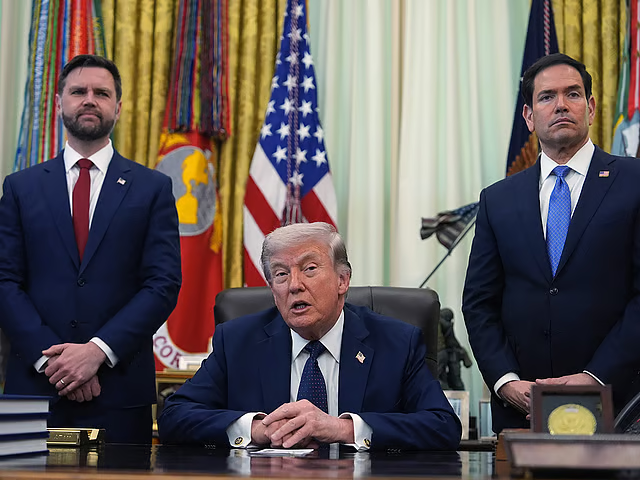
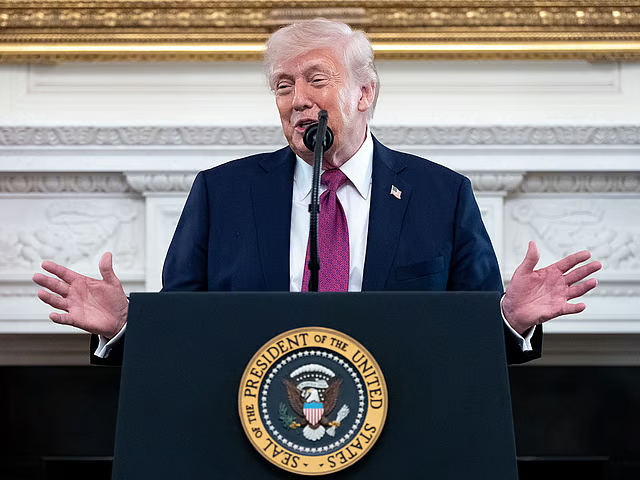
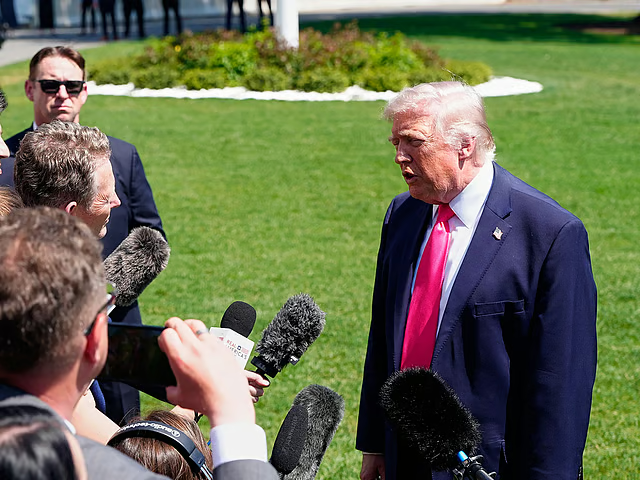
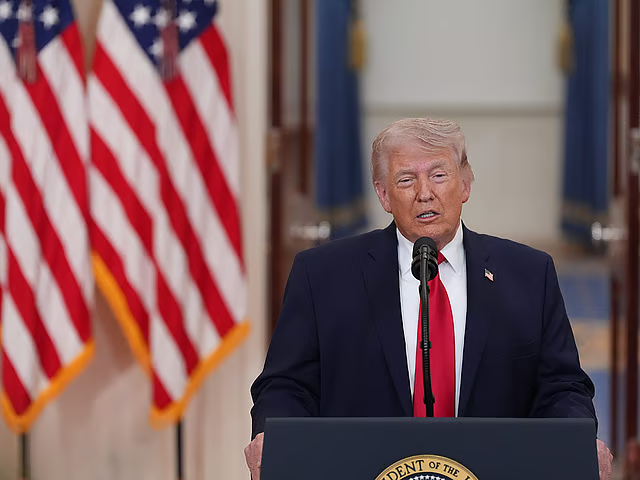
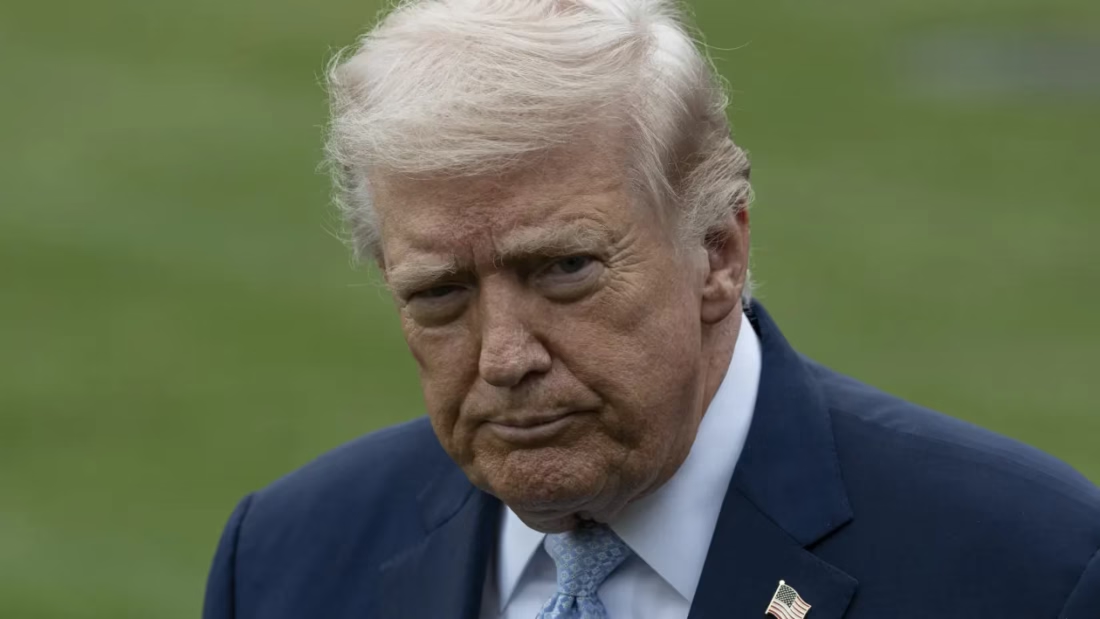
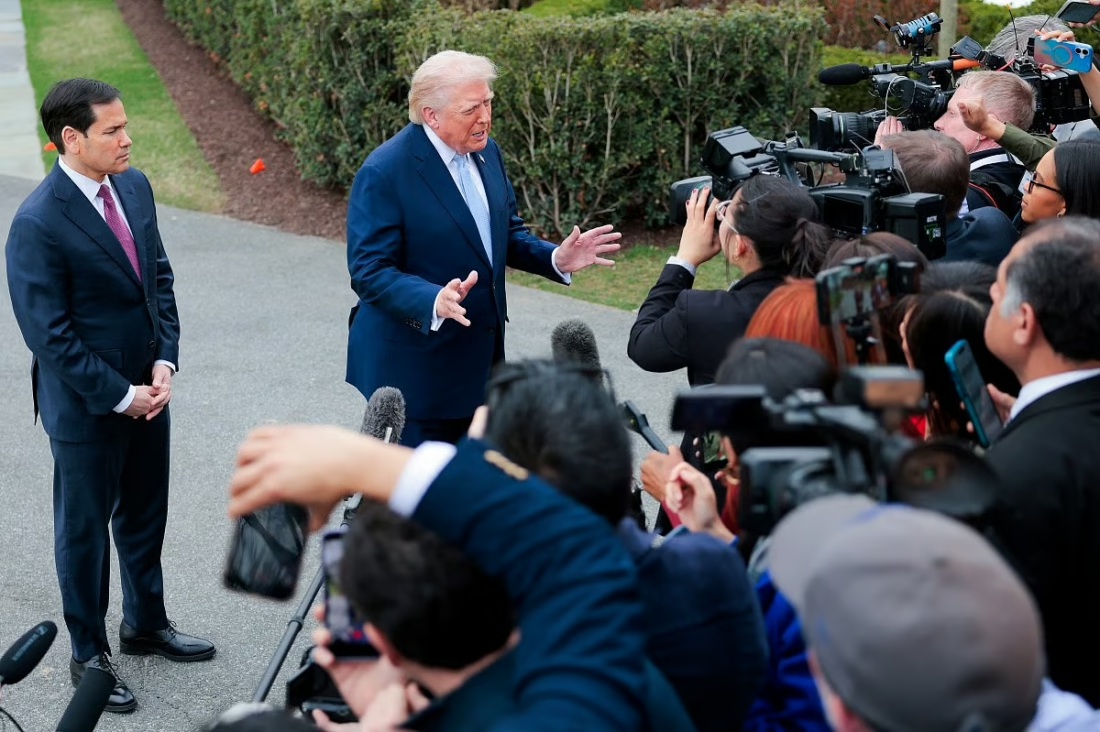
President Donald Trump “is committed to make Hollywood great again,” a spokesman told Reuters, “and his administration continues to explore all possible policy options to ensure Hollywood remains a potent force of American culture.”
The situation keeps getting worse. A 2023 strike by actors and writers cost Los Angeles an estimated $1.5 billion, opens new tab, a UCLA analysis found. Mergers are also taking a toll. Walt Disney (DIS.N), opens new tab swallowed rival Twenty-First Century Fox and other assets in 2019, and now Paramount (PSKY.O), opens new tab is trying to wrap up a mega-deal for Warner Bros Discovery (WBD.O), opens new tab, with $6 billion of promised cost savings putting Tinseltown on edge.
There are significant knock-on effects, too. Part of the city’s tourist appeal is the chance of spotting A-list celebrities such as Charlize Theron and peeking into where “Friends” was shot. As Hollywood hollows out, with stars and productions moving elsewhere, local hotels, restaurants and other small businesses suffer.
Damage is evident from Los Angeles employment figures. Jobs in the motion picture and sound recording industries have collapsed 40% since 2022, according to the Federal Reserve Bank of St. Louis. The number of shooting days in and around the city has halved since 2021 to about 20,000. Studios greenlit just 428 scripted series last year, some 200 fewer than in 2022, according to data cruncher Ampere Analysis.
From Hollywood’s backlots to dining hotspots, conversations feature AI. Although some insiders brush off the threat, one investor who had a front-row seat for the music industry’s Napster disaster 25 years ago is ready to call it quits because of the technology-induced bad vibes in movie-making.
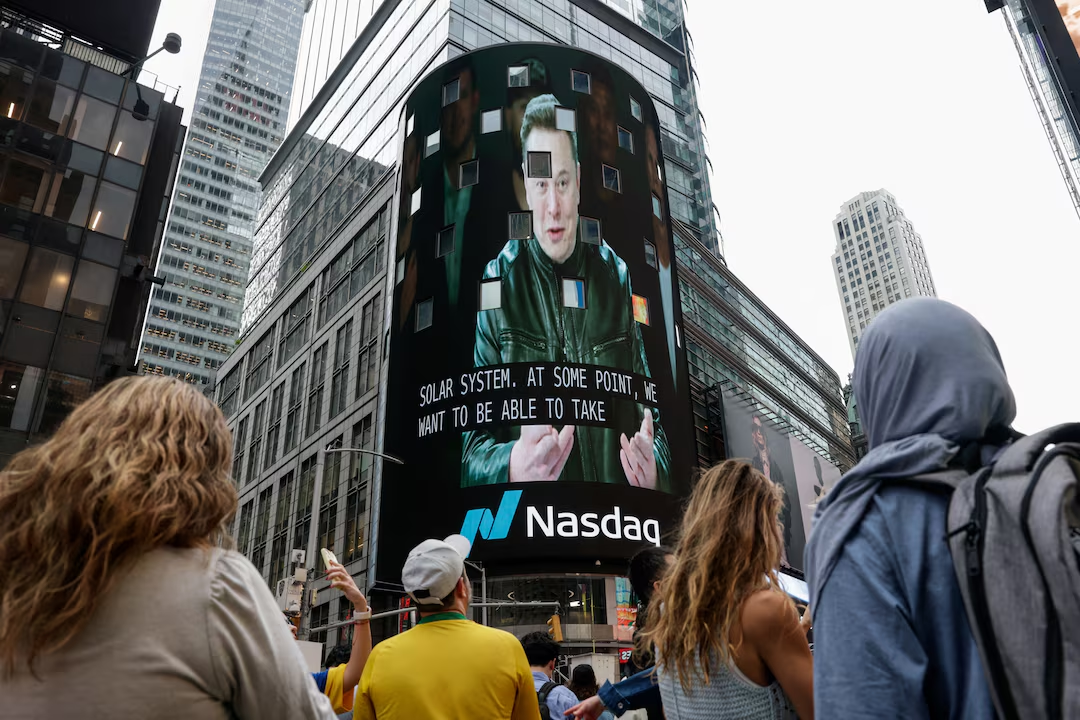
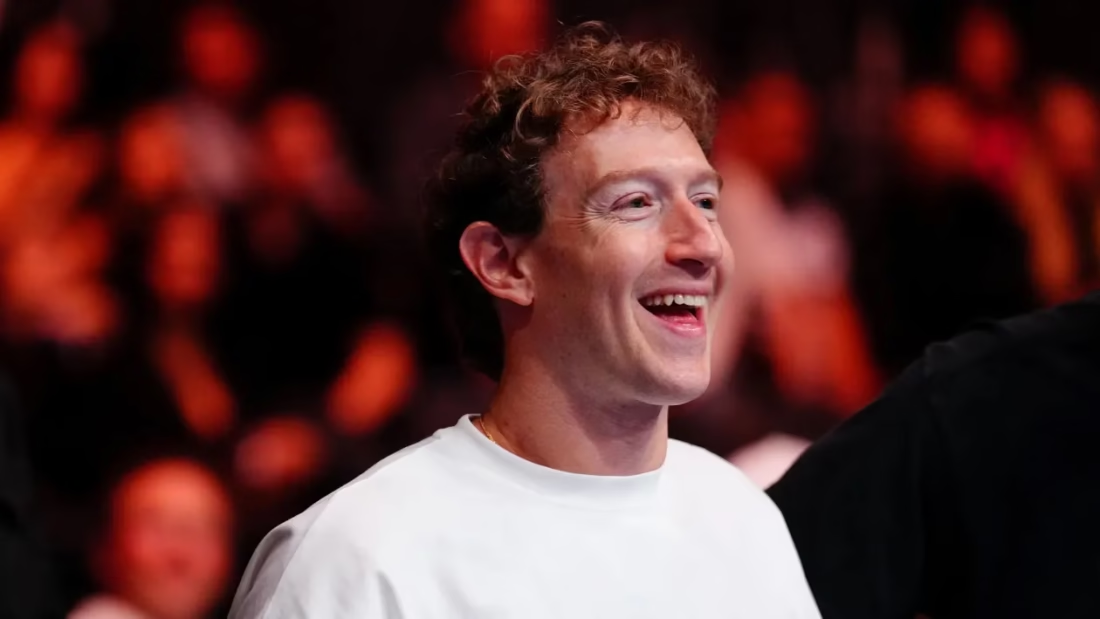
Once AI worms its way into special effects and beyond, it will be hard to stop. The fully AI-generated movie “Hell Grind” may only appeal to a small audience: its three-minute trailer, opens new tab is a compendium of clichés. Other initiatives are gaining credibility, though. “The House of David,” a TV series on Amazon, openly touts, opens new tab its use of AI. Filmmaker Doug Liman is incorporating it, opens new tab into his movie “Bitcoin,” which will feature “versions” of tech bosses Jeff Bezos and Mark Zuckerberg while slashing production costs by roughly 65%, trade publication Deadline Hollywood reported.
AI also threatens Hollywood’s lock on creative material. Seven companies, including Netflix (NFLX.O), opens new tab, are responsible for more than 80% of original-content spending in the United States, McKinsey senior partner Marc Brodherson says. His consultancy estimates that $60 billion in revenue could be redistributed within five years of AI adoption, a pot of money once guaranteed to traditional gatekeepers.
Tax incentives will be of limited use to combat AI and the geographic flexibility it affords. For one thing, they tend to trigger a race to the bottom. Nothing prevents other countries from enhancing their own financial enticements. Or for a director with a laptop poolside anywhere to create a hit TV show.
Other challenges are growing, too. The weather is a big Los Angeles attraction, but wildfires and water shortages weaken the case. Housing prices also have soared. At the end of 2019, the typical Los Angeles home was valued, opens new tab at about the same $720,000 as in New York, per Zillow; it’s now around $950,000, compared to $820,000 in the Big Apple. Last year’s population exodus from Los Angeles County also was higher, opens new tab than in any other U.S. metropolis.
City officials and residents don’t have far to look for places or metonyms that lost their swagger, or worse. The Motor City was once the country’s fifth largest metropolis thanks to Ford Motor, General Motors and Chrysler, with adjacent industries amplifying the effect. New technology and competition eroded the trio’s domestic market share, opens new tab from more than 90% in 1965 to less than 40%. After Detroit went bankrupt in 2013, the U.S. government led a $300 million aid package to help a recovery effort, one that continues even today.
Pittsburgh similarly hit hard times after losing its Steel City cachet. When sofa and table manufacturing migrated overseas, High Point, North Carolina had to reimagine its position as “Furniture Capital of the World.” Madison Avenue is hardly the advertising powerhouse it once was. In California, century-old infrastructure ensures that filmmaking’s epicenter will live on, albeit in notably diminished form. Even with additional financial relief, “Hollywood ending” will soon mean the opposite of what it does now.
Reuters