
 English





























































































































































































































































































































































































































































































































































































































Saudi business visa rejections rise as scrutiny tightens


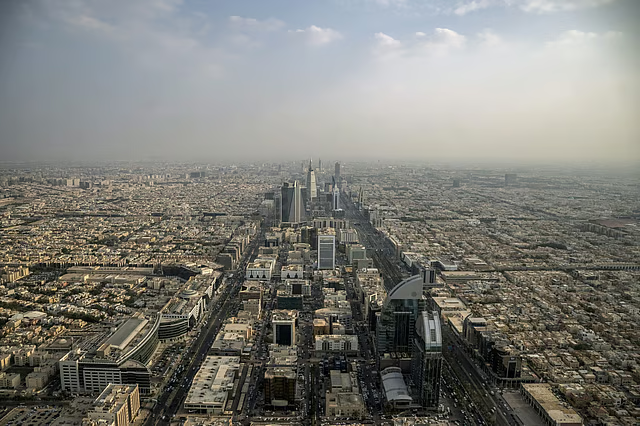
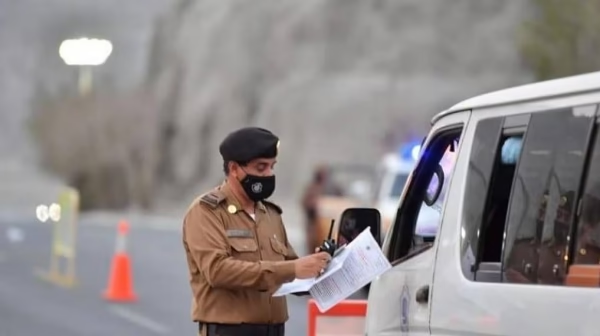
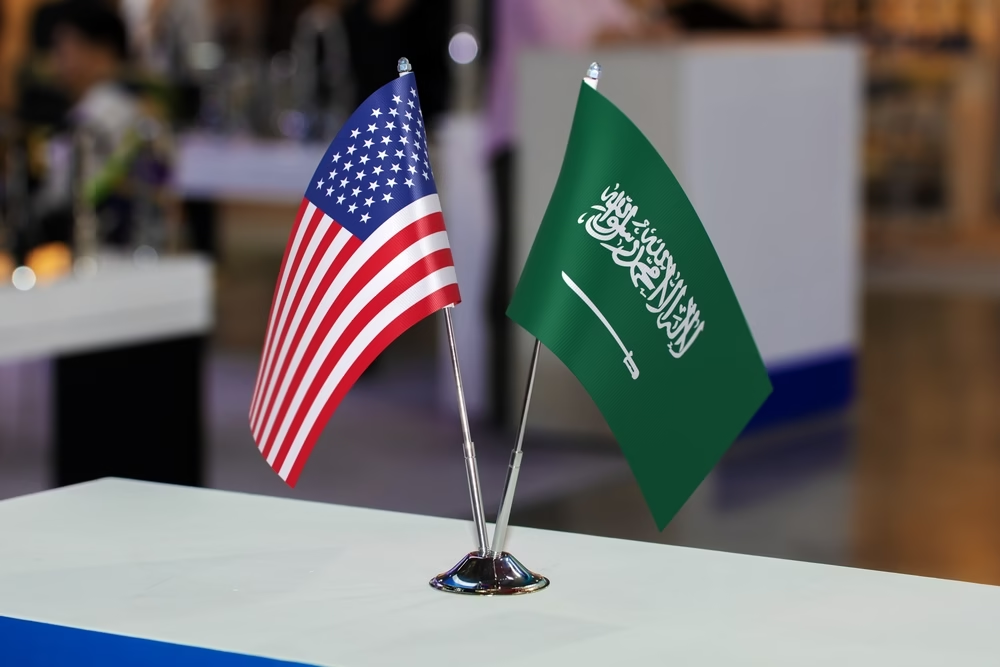
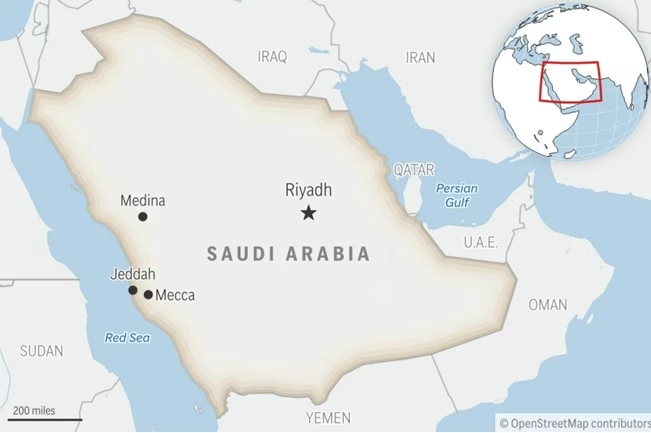
Riyadh is tightening scrutiny of business visas used mainly by UAE-based professionals travelling into Saudi Arabia, disrupting a decades-long practice that has let companies run projects in the kingdom without staff relocation.
There are no official figures on rejections, but immigration advisers and executives say they have seen more applications returned or refused in recent weeks, particularly for technical specialists and frequent visitors.
The “fly-in fly-out model”, as it is occasionally called, typically involves the misuse of a visa meant as a short-term permit for meetings and relationship-building, not revenue-generating work. Specialists say such misapplication has triggered the clampdown.
Abeer Husseini, a partner at global immigration law practice Fragomen, told AGBI there has been “scaled” misuse of business visas that are not intended for productive work.
“Based on our recent experience, we are seeing a higher possibility for business visa applications to be returned in certain scenarios,” Husseini said.
Abdulrahman Alfahad, a client relationship manager at Sovereign PPG Corporate Services in Saudi Arabia, said companies have relied on repeated business visits for individuals carrying out day-to-day operational roles, “which goes beyond the intended scope of a business visit visa”.
“Authorities are paying closer attention to travel frequency, length of stay and the nature of activities undertaken, particularly where patterns resemble full-time employment,” Alfahad said.
He said the impact is being felt mostly by consulting, professional services and project-based sectors, as well as regional headquarters structures where staff frequently travel in and out of the kingdom.
More than 10 UAE-based professionals at companies across banking, law and management consulting told AGBI their business trips to Saudi Arabia have been cancelled or delayed in recent months, though previously they had been entering and leaving the country nearly every week.
Immigration experts said the stricter outcomes reflect Saudi Arabia’s broader drive to support labour-market policies and a shift toward international standards.
“Saudi is clearly moving towards international best practice by drawing a firmer distinction between permissible business activities and work that requires employment authorisation,” Alfahad said.
Saudi Arabia has been pushing companies to build onshore capacity under Vision 2030 and meet Saudisation requirements – rules that require companies to employ a set proportion of nationals.
In 2024, it required businesses to base their regional headquarters in Saudi Arabia to qualify for government contracts.
Many multinationals that have long run operations out of Dubai have moved to meet Riyadh’s requirements, drawn by the scale of business in Saudi Arabia, which has the Gulf’s largest population.
But an HR executive, who declined to be identified, told AGBI that while companies have set up headquarters in Saudi Arabia, staffing is kept to a minimum – both to limit Saudisation quotas, which increase with each expatriate hire, and because employees are unwilling to relocate.
“Misuse of business visas can distort workforce reporting, and stricter enforcement supports more accurate Saudisation compliance and localisation objectives,” Alfahad said.
Ahmed Hassounah, managing director at Job Borsa, a Saudi recruitment services company that helps businesses comply with localisation requirements, said the goal is enforcement, not disruption for businesses already operating in Saudi Arabia.
“What the government is really focused on is ensuring that citizens and employees are trained and actively participating in the market,” Hassounah said.
AGBI