 English



















































































































































































































































































































































































































































































































































































































































Hajj 2026: What every pilgrim should know

Imagine saving up for years, perhaps decades, for a single journey. You pack your bags, say goodbye to your loved ones, and travel thousands of miles to a place you have only ever seen in pictures or dreamed about at night.
That is what Hajj means to a Muslim. It is not a holiday or a tourist trip. It is a calling from God. Of the five core pillars that hold up the religion of Islam, Hajj is the fifth.
It is the pilgrimage to Mecca, and for anyone who is able, it is expected to be done at least once in a lifetime. But why is it so special?
Because Muslims believe that Hajj brings along a rare and beautiful chance to wipe the slate completely clean, to ask for forgiveness, and to return home as if they were just born, free of sin.
The Prophet Muhammad, peace be upon him, once said that whoever performs Hajj sincerely, without any bad behaviour, will come back as pure as the day their mother brought them into this world. That is a promise that fills hearts with hope. We are less than two weeks away
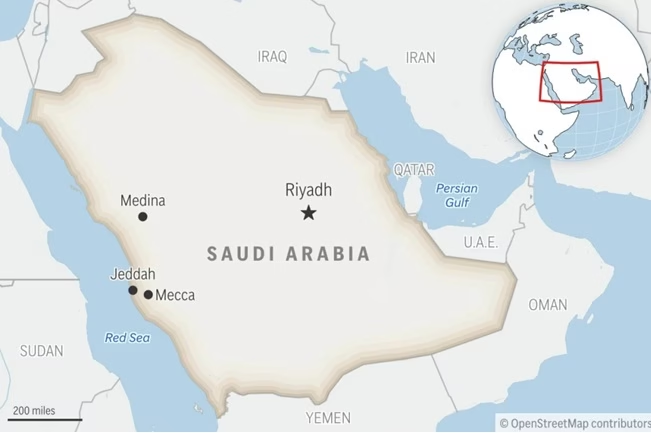
Right now, we are less than two weeks away from one of the most sacred times of the year. Hajj 2026 is expected to begin on Monday, May 25, and will continue until Saturday, May 30.
The most important day of all, the Day of Arafah, will likely fall on Tuesday, May 26, and then Eid Al Adha will follow on Wednesday, May 27.
If you know someone travelling for Hajj this year or are preparing for the journey yourself the coming days are likely already filled with prayer, preparation and emotional readiness for one of Islam’s most sacred experiences.
Who actually has to go? And who does not?
Hajj is a duty, but God is kind and does not ask for what is impossible. So who is expected to go?
Only those who are Muslim, grown up, of sound mind, physically strong enough to handle the journey, and able to afford it without begging or going into debt.
That sounds like a lot, but it is really just common sense. If you have a long term illness that leaves you bedridden, if you are elderly and frail, if you have a mental or physical disability that stops you from completing the rites, or if you simply do not have the money after paying for food, rent, and looking after your children, then you are not required to go.
Children are also exempt, although some families take them along for the blessing. And here is the beautiful part: there is no guilt, no shame, and no sin in staying home if you genuinely cannot go.
God sees your heart and your situation. Even the Prophet’s own wife, Aisha, narrated that the Prophet said there is no greater reward than for someone who intends to do good but is prevented by a genuine excuse.
What to keep in mind as the days tick down
If you are preparing to leave in less than two weeks, there are a few things that deserve your attention more than anything else. First, your body needs to be ready. Hajj is not easy.
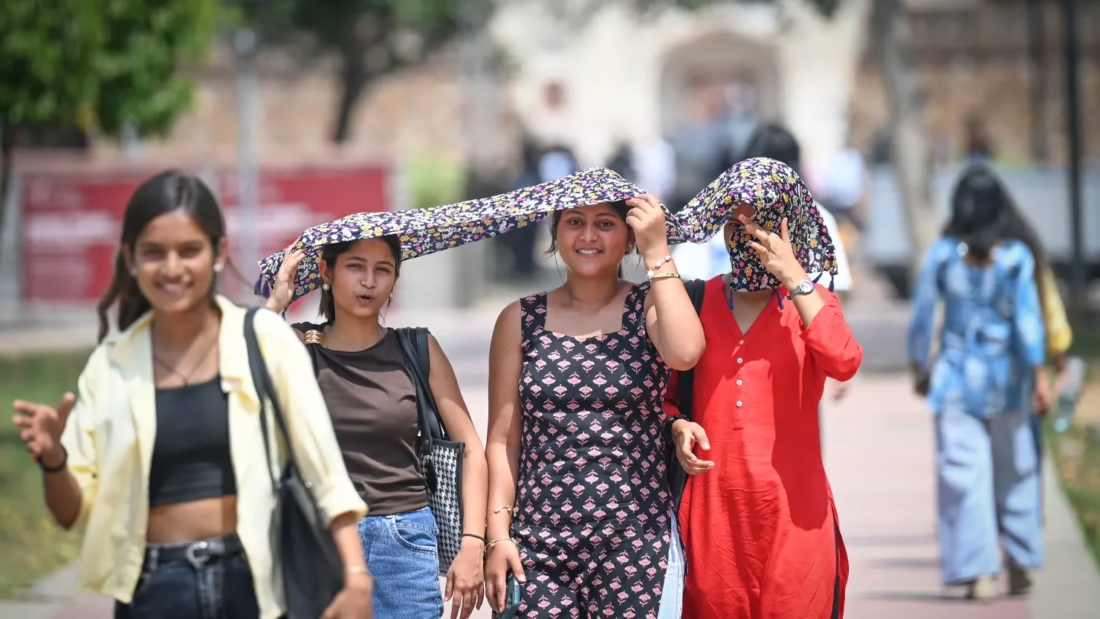
You will walk between five and fifteen kilometres every single day, often under the hot sun, moving between Mecca, Mina, Arafat, and Muzdalifah with millions of other people.
So start walking now. Go for gentle walks around your neighbourhood, drink plenty of water, eat properly, and if you take any medication, see your doctor for a final check up. This is not about being an athlete. It is about being kind to your own body so that you can focus on your soul.
Second, there is a state called Ihram. It is not just clothing. It is a mood, a mindset, a promise you make to yourself and to God. When you enter Ihram, you are saying: I will not argue. I will not shout. I will not fight. I will not cut my hair or my nails. I will not wear perfume.
For men, Ihram means two simple white sheets without any seams. For women, it means modest clothing that leaves the face and hands uncovered. That is it. No designer labels, no jewellery, no signs of wealth or status.
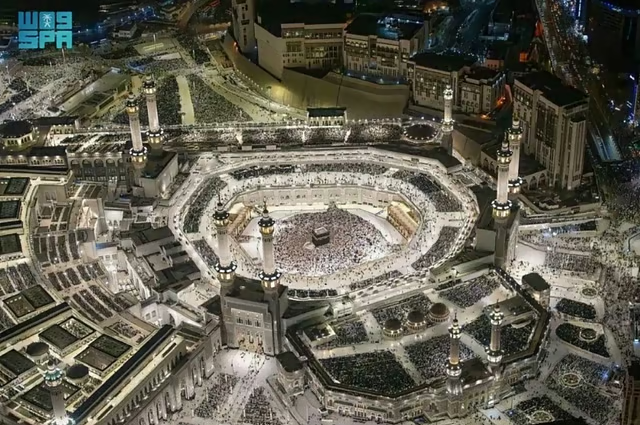
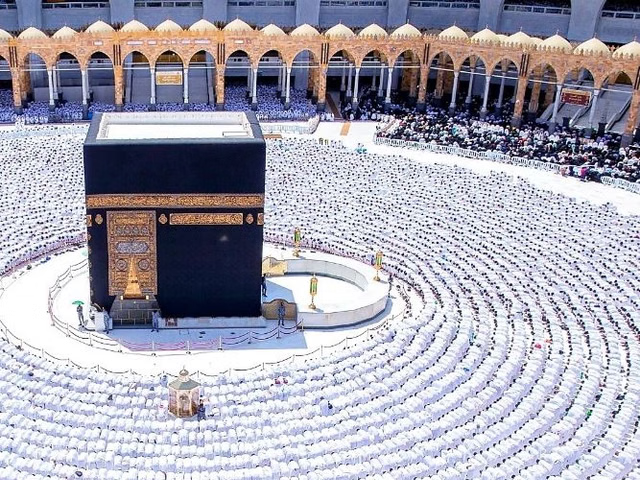
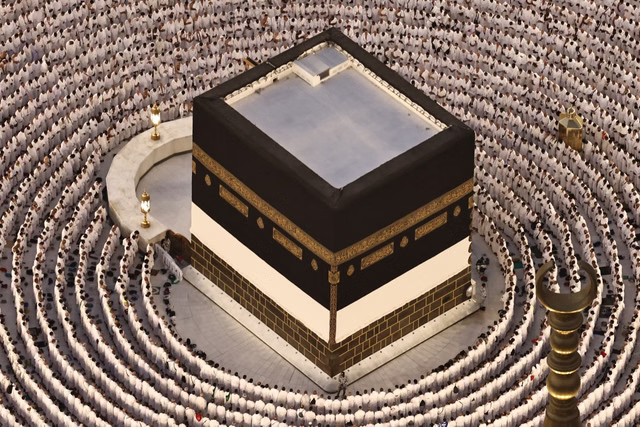
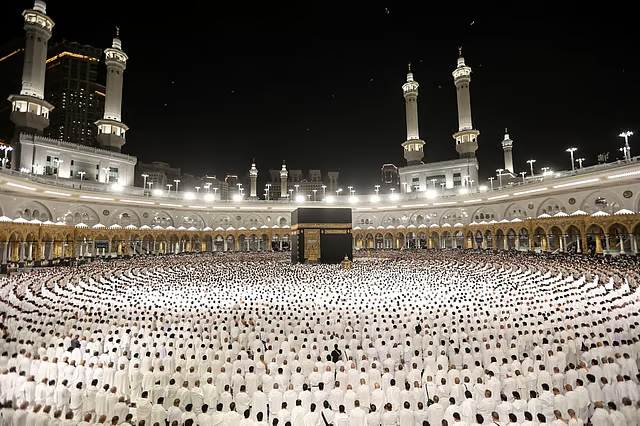
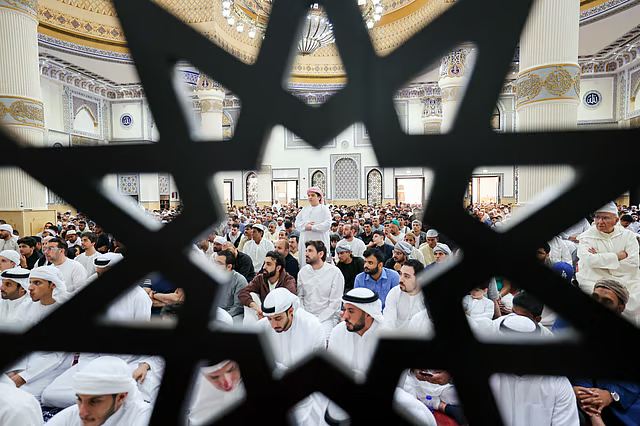
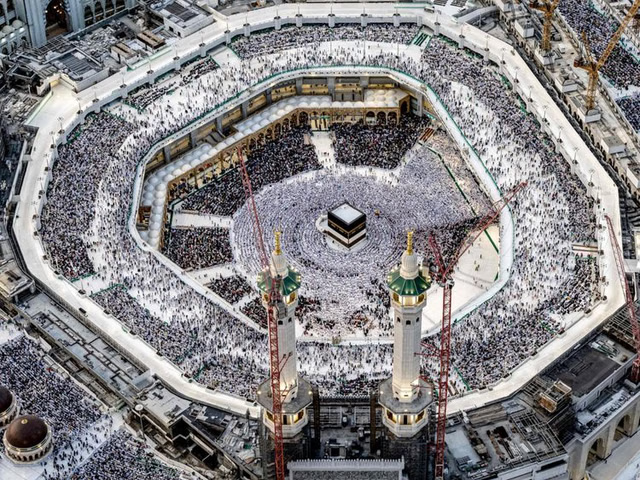
A million people dressed in white, standing together, rich and poor, king and worker, all looking exactly the same. That image alone is enough to bring tears to your eyes because it shows what really matters.
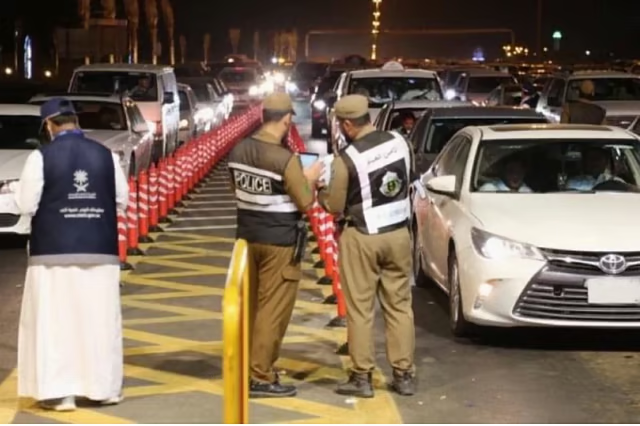
Third, please think about safety. The biggest dangers during Hajj are not spiritual but practical. Crowds can be overwhelming. People can get lost, separated, or hurt. So make a plan with your group.
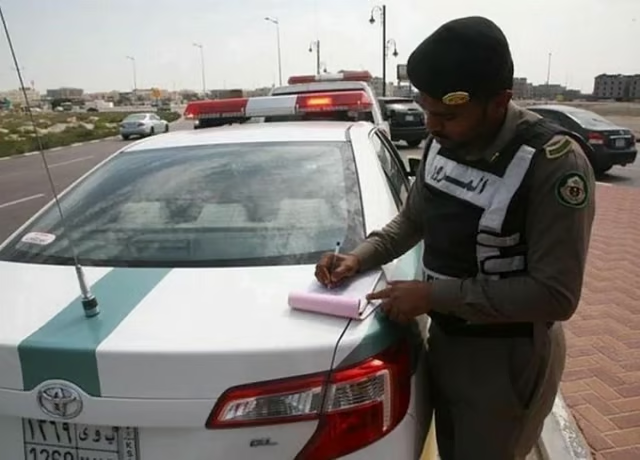
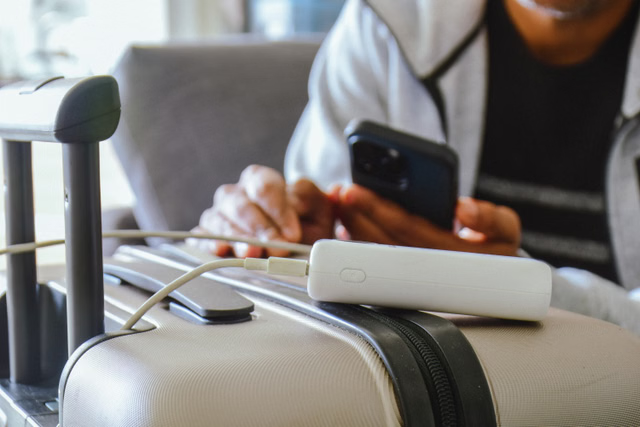
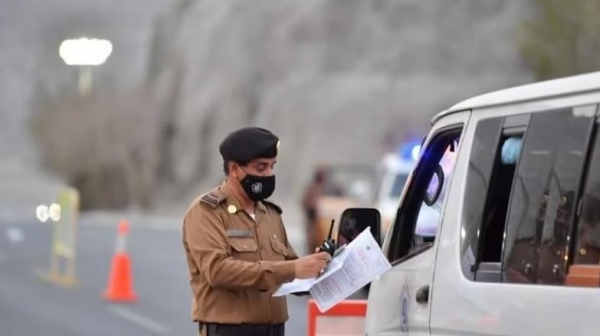
Carry identification. Keep your phone charged. Agree on a meeting point before you go anywhere. Listen to the Saudi authorities and your group leader because they are there to protect you.
And do not forget simple health basics like wearing a mask in crowded areas, washing your hands often, and carrying your medicines with you wherever you go.
Finally, and perhaps most importantly, check your intention deep inside your heart. Are you going for show? For pictures on social media? To tell everyone back home that you made it?
Or are you going for God alone? Hajj is a private conversation between you and your Creator. No one else needs to know how much you cried or how long you prayed. Do it for Him, and you will find peace.
What actually happens during hajj? A gentle walk through
You might be wondering what a pilgrim actually does day by day. Let us walk you through it like a story. It all begins with the intention and entering Ihram.
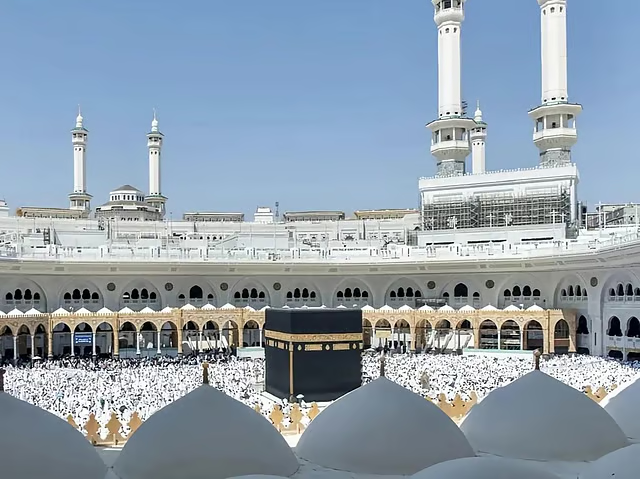
Then you arrive in Mecca and stand before the Kaaba, that beautiful cube shaped building that Muslims around the world turn toward when they pray. You circle it seven times, slowly, counter clockwise, and it is called Tawaf.
After that, you run seven times between two small hills, Safa and Marwah, remembering a desperate mother named Hajar who ran back and forth looking for water for her baby in the burning desert.
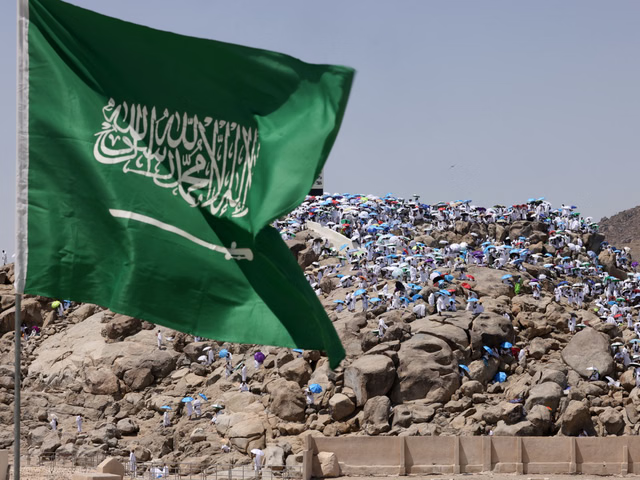
Then you head to Mina, a tent city where you spend a night praying and resting. The next morning, you go to the plain of Arafat, and this is the heart of Hajj. You stand there from noon until sunset, just standing, praying, crying, asking, hoping.
The Prophet said that Hajj is Arafat, meaning if you miss this day, you miss Hajj entirely. After sunset, you move to Muzdalifah, where you sleep under the open sky with nothing but a small mattress or the ground itself.
You collect tiny pebbles because tomorrow you will throw them at pillars that represent the devil. You throw seven pebbles on the first day, then more on the following days, to remember Prophet Ibrahim who threw stones at the devil when he tried to stop him from obeying God.
Then comes the sacrifice of an animal, which we call Qurbani, to honour Ibrahim’s willingness to sacrifice his own son before God provided a ram instead. You shave your head if you are a man, or you clip a small bit of hair if you are a woman, as a sign of renewal.
Then you go back to Mecca for another Tawaf, and finally, before leaving the holy city, you say goodbye with a Farewell Tawaf, circling the Kaaba one last time with a heavy heart.
Hajj and Umrah are not the same thing
Some people confuse Hajj with Umrah, so let me clear that up quickly. Umrah is a shorter, simpler pilgrimage that you can do any day of the year. It is not required, but it is beautiful and rewarding.
Hajj is the one that is required, but only once in your life, and only during these specific five or six days of Dhul Hijjah. Think of Umrah as a short visit and Hajj as the full, once in a lifetime journey.
A final advice
If you are leaving in less than two weeks, pack lightly but wisely. Take your Ihram, comfortable sandals that you have worn before, any medicines you need, unscented soap, a sleeping bag or blanket for the cold night at Muzdalifah, and a small backpack.
Learn the Talbiyah, that beautiful prayer that pilgrims repeat over and over: “Here I am, O God, here I am.”
And when you stand on Arafat, do not forget your loved ones. Do not forget your parents, your children, your neighbours, and every Muslim everywhere who cannot be there with you.
The Day of Arafah is the best day in the entire year for prayer, and your du’a on that day is never rejected. So pray for peace, for healing, for forgiveness, and for unity.
GN